The Never-Ending Cycle of Downloads
Every time a new ISO file downloads, another chunk of bandwidth is used, another bit of energy is consumed, and another piece of the environment is impacted. For years, I’ve watched this cycle play out: users frustrated with their current setup, downloading yet another Linux distribution in search of stability. Each download adds to the pile of wasted resources, and each failed install leaves users searching for a fix, or another distro.
The Role of Major Distributions
Many Linux distributions release frequent, not well tested patches and updates, often leading to broken systems. When an install fails, users often choose to download a new ISO and switch to a different distribution. This cycle is not just frustrating, it’s harmful. Countless terabytes of data are moved every hour because of failed installs, YouTube hype, and plain incompetence. The environmental cost is staggering.
The Microsoft Factor
At the same time, Microsoft’s operating system continues to evolve in ways that leave more and more users feeling alienated. Countless YouTube “experts” tell users to replace Windows with Linux, fueling the cycle of endless downloads. Linux, in turn, positions itself as the answer to Windows, but the reality is more complex. While Linux offers freedom and flexibility, it’s not always the perfect solution for every user.
Snapshots: The Real Innovation
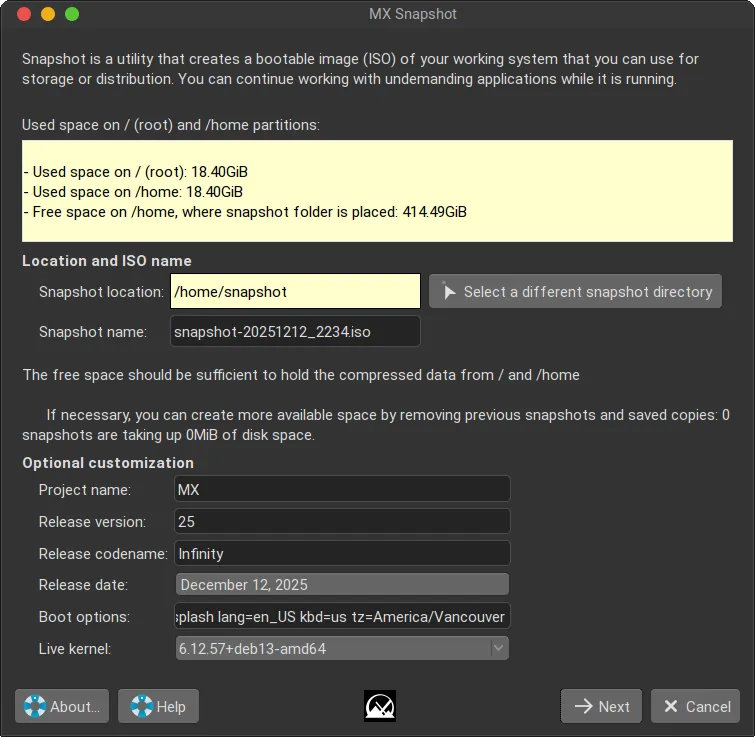
MX Linux stands out as a beacon of sustainability and user empowerment. Its snapshot feature gives users the freedom to play, experiment, and break things, all while knowing they can recover instantly. For those of us who actually work on our machines, this is priceless. For those who just want the latest and greatest, the chase continues. But for the rest of us, MX Linux has become the one and only distro worth running.
The Future of Linux: Stability, Recovery, Sustainability
If you value your time and the environment, give MX Linux a try. Install it. Update it. Take a snapshot. Experiment. Break things. And know that, thanks to MX Linux, you can always get back to a working state in about five minutes. The future of Linux should be about stability, recovery, and sustainability, not endless downloads and broken installs. Both, major distributions, and the broader ecosystem need to take responsibility for the environmental impact of their actions.